Land Clearing Pricing Guide for the Shenandoah Valley
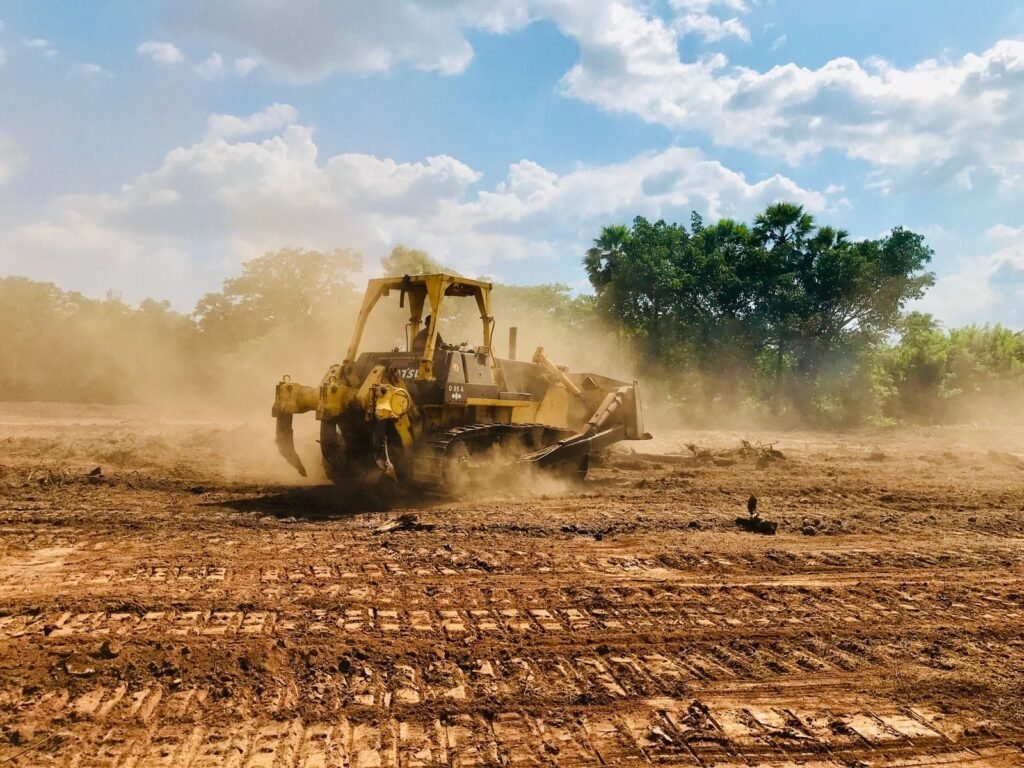
Most clearing companies won’t put numbers on their websites. We think that’s backwards — you can’t plan a project around “call for a quote.” Here are the real ranges for this area, how the pricing models work, and the honest factors that put a given property at the low or high end.
The Day Rate: How Most Mulching Is Priced
Forestry mulching in the Front Royal / Winchester area is typically priced by the day, at $2,500 to $2,750 per day for a machine and operator. A day is a full working day on your property. At the common pace of roughly an acre a day in moderate growth, that puts typical mulching in the neighborhood of $2,500 to $2,750 per acre — less per acre in light brush that clears faster, more per acre in very dense or steep ground that clears slower. Half-day minimums exist with some operators for small jobs like a single fence line or trail section; ask during the assessment.
Per-Acre Quotes
Some operators quote a flat per-acre price after seeing the land, especially for larger tracts. Per-acre pricing shifts the density risk to the operator, so the quote reflects the worst of what they saw — a per-acre quote on mixed ground sometimes prices the easy acres like the hard ones. For most properties under ten acres, the day rate with a realistic production estimate is the fairer deal for both sides. Either way, get the production expectation in plain language: “about how many acres in a day on ground like mine?”
What Moves the Price
- Density and tree size. Light brush and briars are fast. Dense saplings slow the drum. Standing trees beyond the mulcher’s size range must be felled and handled separately — that’s the biggest single price mover in mulching.
- Terrain. Slope, rock, wet ground, and creek crossings all slow production. Flat, dry, open woodlot is the fast end.
- What happens to the material. Mulching in place is included by definition. Traditional clearing changes price significantly by debris handling: chipping costs less than hauling; hauling costs less than hauling far.
- Stumps and roots. Grinding stumps flush is mulching work. Excavating stumps and root-raking for a building site is traditional clearing work, priced differently.
- Access and distance. A property the machine can drive onto from the road prices better than one requiring a long, soft haul in. Multiple small, scattered areas price worse than one contiguous block.
- Mobilization. Operators move heavy machines on trailers; very small jobs still carry the move. Combining your list — the field, the fence line, the trails — into one visit spreads that cost over more work.
Traditional Clearing Pricing
Full-removal clearing is quoted by the project after assessment, because the variables (timber size, stump work, debris destination, grading) swing too widely for an honest day rate. Beware any flat quote given sight-unseen for traditional clearing — in either direction.
Call for a Property Assessment — the assessment is how a day-rate estimate becomes a firm number for your ground: acreage, density, terrain, and end goal are the four things that decide it.