Forestry Mulching in the Northern Shenandoah Valley
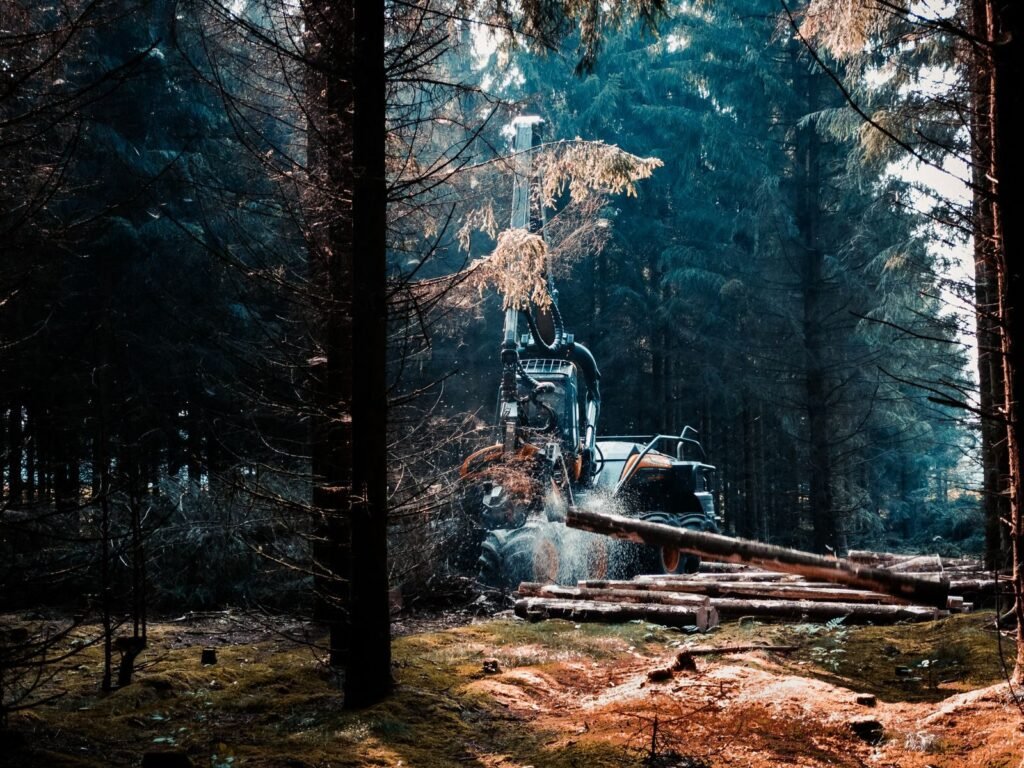
Forestry mulching has changed what it costs — in money and in weekends — to take back overgrown land. If you’ve been picturing a crew, a bulldozer, a burn pile, and a month of Saturdays, this page is the update.
How It Works
A forestry mulcher is a tracked or wheeled machine fitted with a rotating drum of steel teeth. The operator drives through brush and small trees, and the drum grinds everything it touches — standing saplings, briars, vines, deadfall, stumps ground to grade — into mulch in a single pass. One machine, one operator, no second crew following behind with chainsaws, and nothing to load, haul, or burn.
In a single pass the mulcher can handle:
- Dense brush, briars, and invasive undergrowth
- Saplings and trees typically up to 4–8 inches in diameter (larger material is handled tree by tree or by traditional clearing)
- Fence lines, field edges, and right-of-ways choked with growth
- Old pasture that has gone to cedar, locust, and multiflora rose
- Stumps from previous cutting, ground down flush
What a Day Looks Like
A common planning figure for this region is about one acre per day in moderately dense growth. Light brush on open ground can go faster — two acres or more in a day isn’t unusual — while steep, rocky, or extremely dense stands go slower. Your operator will give you a realistic read after seeing the property, which is why the assessment comes first: the honest variables are density, terrain, and how big the standing trees are.
What Stays on the Ground
Everything — and that’s the point. The grindings stay as a mulch layer, typically a few inches deep. That layer holds moisture, suppresses the regrowth of what was just cleared, protects the soil from erosion on slopes, and breaks down into the soil over the following seasons. There’s no disturbed, bare dirt waiting for the first hard rain, no stump holes to fill, and no pile burning with the permits and smoke that come with it. On pasture ground, grass pushes back up through the mulch; on woodlot ground, you get a park-like floor you can walk, ride, and maintain with a brush hog from then on.
What Mulching Isn’t
Mulching doesn’t remove roots or stumps below grade, and it doesn’t grade. If you’re building on the lot, you’ll still want traditional clearing for the building footprint. Mulching also doesn’t kill everything permanently — aggressive invasives can resprout and may need a follow-up pass or treatment the next season. A good operator will tell you plainly which of your goals mulching handles in one visit and which need a second step.
Call for a Property Assessment — tell us the acreage and how thick it is. Typical day rates in this area run $2,500 to $2,750; our Pricing Guide page breaks down exactly what moves that number up or down.