Mulching vs. Traditional Clearing: The Honest Comparison
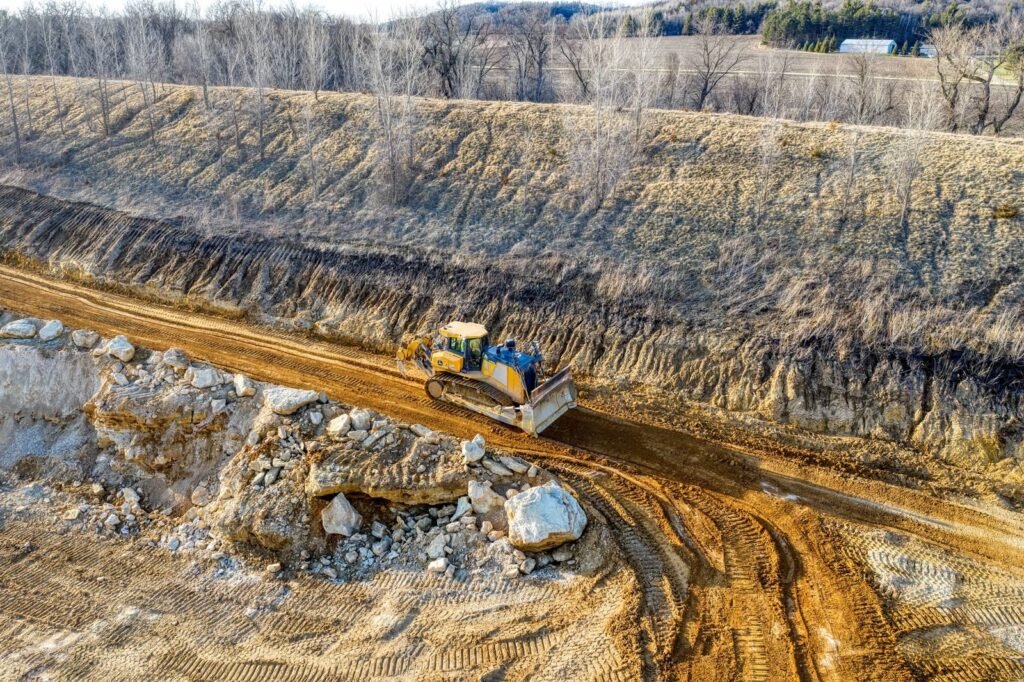
These two methods get quoted against each other constantly, usually by someone selling one of them. Here’s the comparison we’d want if it were our land and our money — including where each method genuinely loses.
The Short Version
Mulching wins on speed, cost per acre, and soil protection whenever the goal is reclaiming, opening, or maintaining land. Traditional clearing wins whenever something is going to be built on the ground, because it’s the only one of the two that actually removes stumps, roots, and timber from the site.
Side by Side
What’s left behind: Mulching leaves a layer of ground-up vegetation as surface mulch; roots and stump bases stay in the ground below grade. Traditional clearing leaves bare, workable dirt — stumps and roots excavated, debris chipped, stacked, or hauled.
Speed: A mulcher covers roughly an acre a day of brush and small trees, in one pass, with one operator. Traditional clearing of the same acre takes longer and typically involves more machines and crew days.
Cost: Mulching runs on a predictable day rate — $2,500 to $2,750/day in this area. Traditional clearing is project-priced and almost always costs more per acre for full removal, especially with hauling.
Soil and erosion: Mulching barely disturbs the soil — the mulch layer protects slopes and creek banks from erosion, and there’s no exposed dirt. Traditional clearing exposes soil by design; on slopes and near streams, that can trigger county erosion-control requirements — check with your county about what’s required for your project before work starts.
Regrowth: Mulched invasives can resprout from roots; some species need follow-up. Traditionally cleared ground with roots removed gives a cleaner restart — but bare dirt is also an invitation to whatever seeds blow in first.
Building readiness: Mulching is not build-ready. If a foundation, driveway, or septic field is going there, the footprint needs traditional clearing — stumps out, roots out, graded. Everything outside the footprint can usually still be mulched.
The Combination Most Valley Owners Choose
Clear the building envelope traditionally — house site, driveway, septic area — and mulch everything else: the lot’s remaining brush, the field edges, the trails, the view. You pay traditional prices only on the fraction of ground that truly needs it, and day-rate mulching prices on the rest. Any operator who insists the whole parcel must be done their one way is telling you about their equipment list, not your land.
Call for a Property Assessment — describe what the land has to do when it’s finished. That answer, more than any other, decides the method — and we’ll match you with an operator equipped for it.